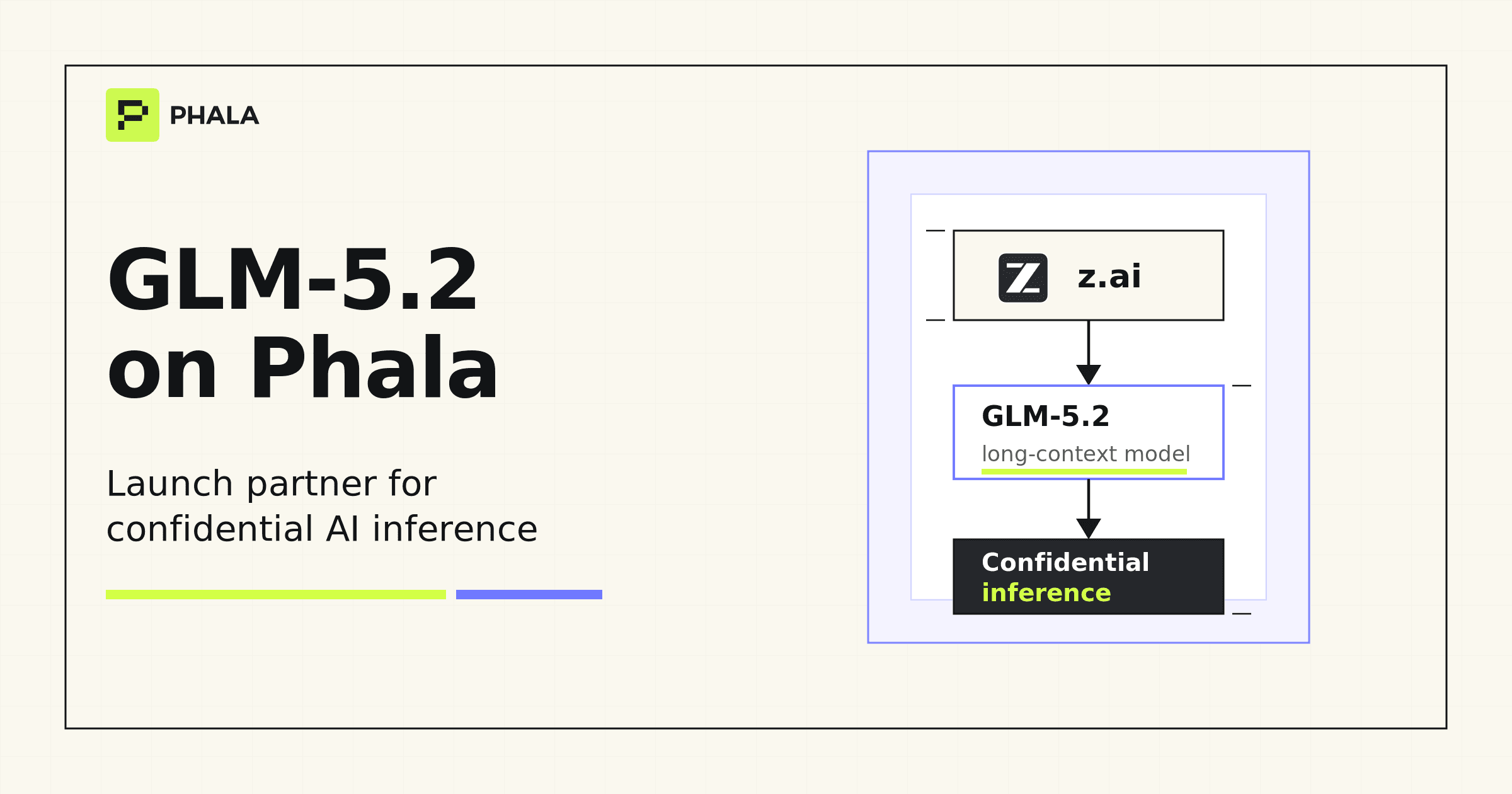
Phala is a GLM-5.2 launch partner, bringing Z.ai’s new open-source SOTA model into a privacy-first inference stack built for production AI workloads. The launch combines model-side strength — 1M-token context, long-horizon coding capability, and open weights — with Phala’s confidential AI infrastructure for encrypted, TEE-backed inference.
As open models become more capable, the question shifts from whether teams can run them to whether they can run them with the guarantees required for sensitive data. GLM-5.2 gives builders a stronger model option for long-context agents, coding, and enterprise reasoning. Phala adds the confidential infrastructure layer that protects prompts, context, and inference execution.
Phala × GLM-5.2: privacy AI as the deployment layer
The launch partner story is about where the strongest open models run. Developers want open-source SOTA capability, simple OpenAI-compatible routing, and deployment guarantees for sensitive prompts, code, documents, and agent traces. Phala makes GLM-5.2 available as a confidential AI model path: strong open model performance running through privacy-first infrastructure.
- GLM-5.2 provides a new model path for long-context reasoning, agent workflows, and coding-heavy applications.
- Phala provides confidential AI infrastructure for encrypted inference, TEE-backed execution, and verifiable runtime properties.
- Redpill gives teams an OpenAI-compatible API surface to route production workloads into this stack.
GLM-5.2 official benchmark highlights
Z.ai’s GLM-5.2 release positions the model as an open-source long-horizon coding model with a solid 1M-token context window. In the official benchmarks, GLM-5.2 is the top-ranked open-source model across the long-horizon coding set, trails Claude Opus 4.8 by 1% on FrontierSWE, edges out GPT-5.5 by 1% on FrontierSWE, and improves sharply over GLM-5.1 on standard coding benchmarks including Terminal-Bench 2.1 and SWE-bench Pro. Design Arena also ranked GLM-5.2 first with 1360 Elo in its code category, calling out its open weights.
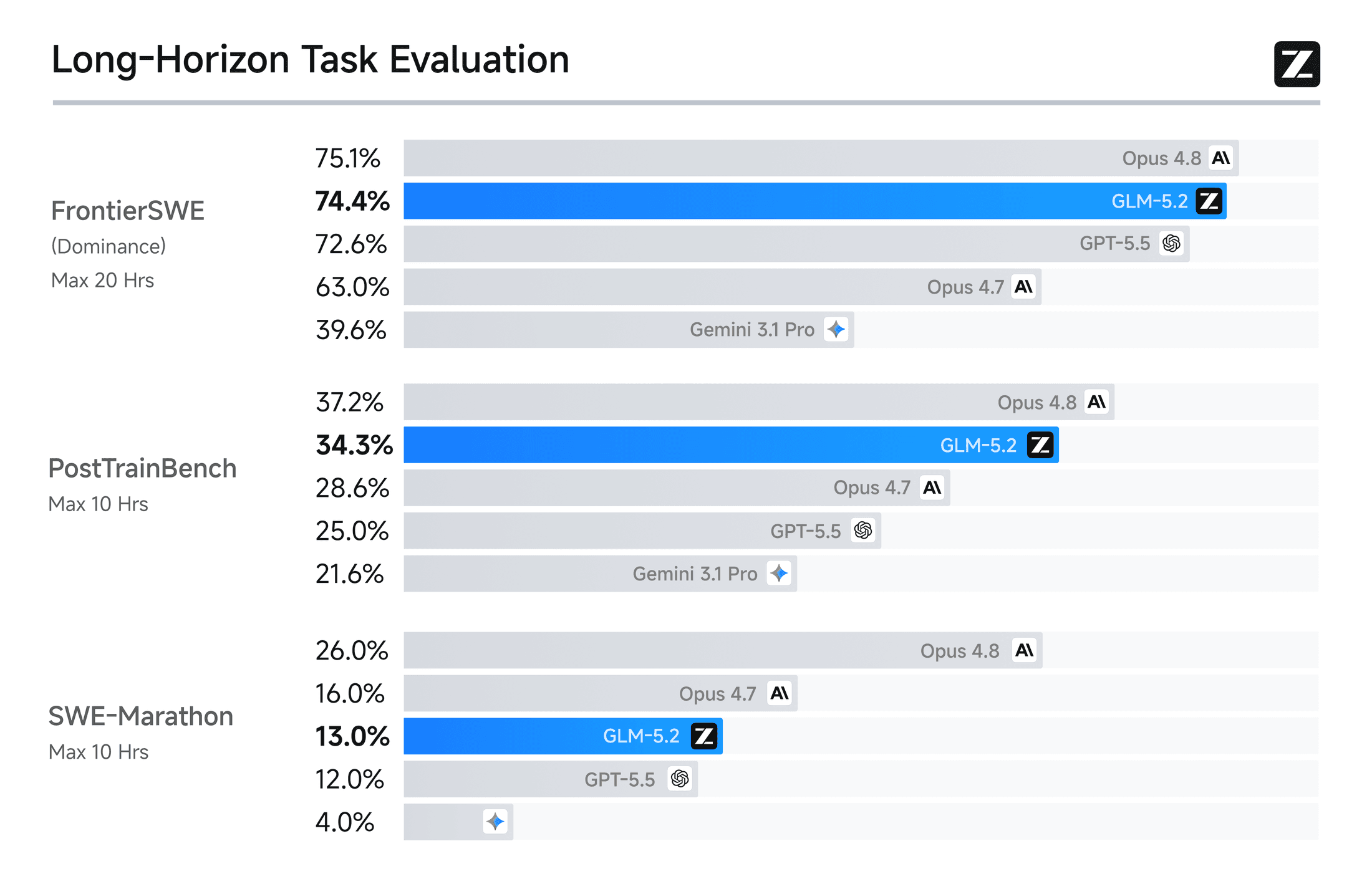
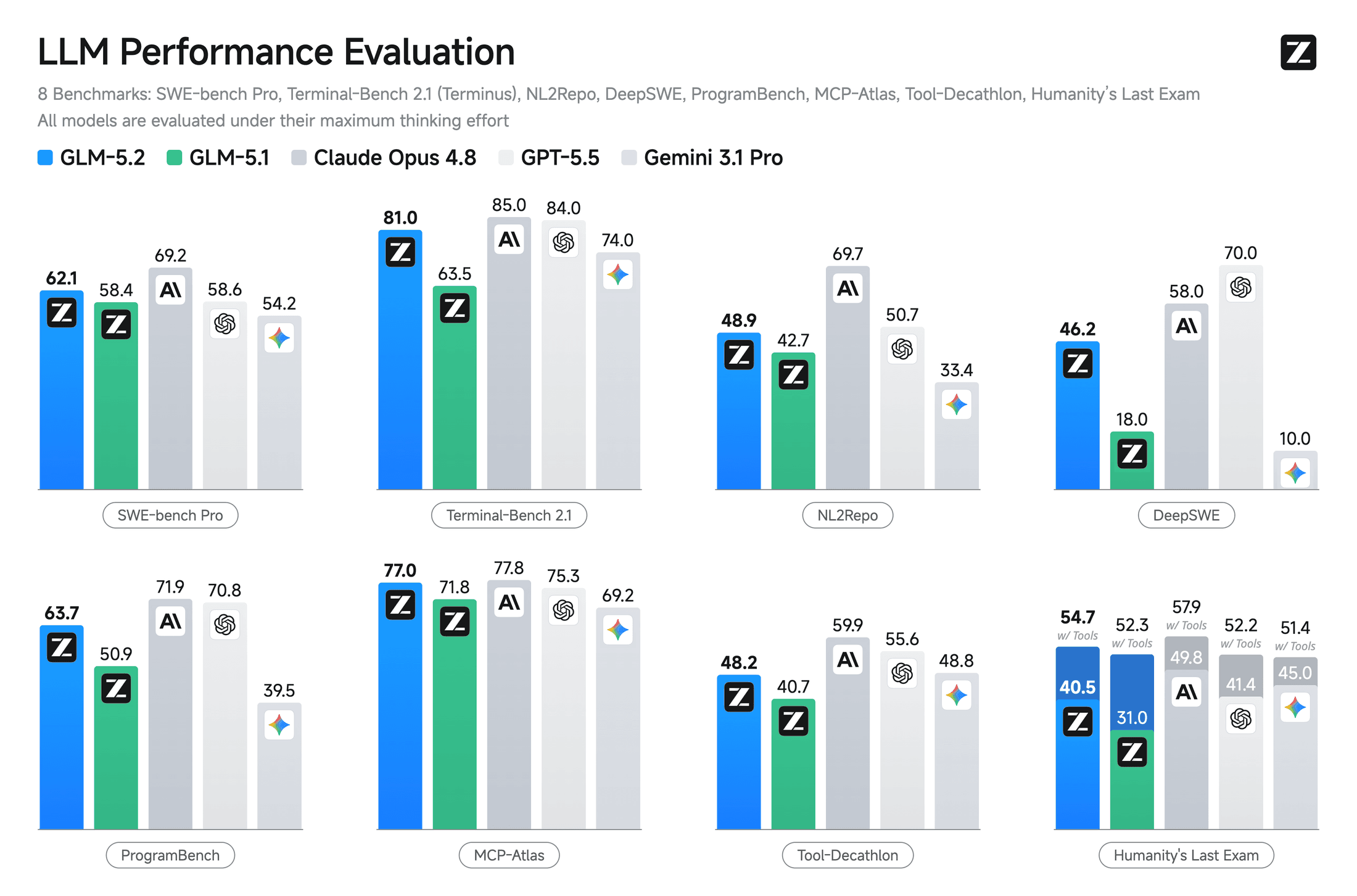
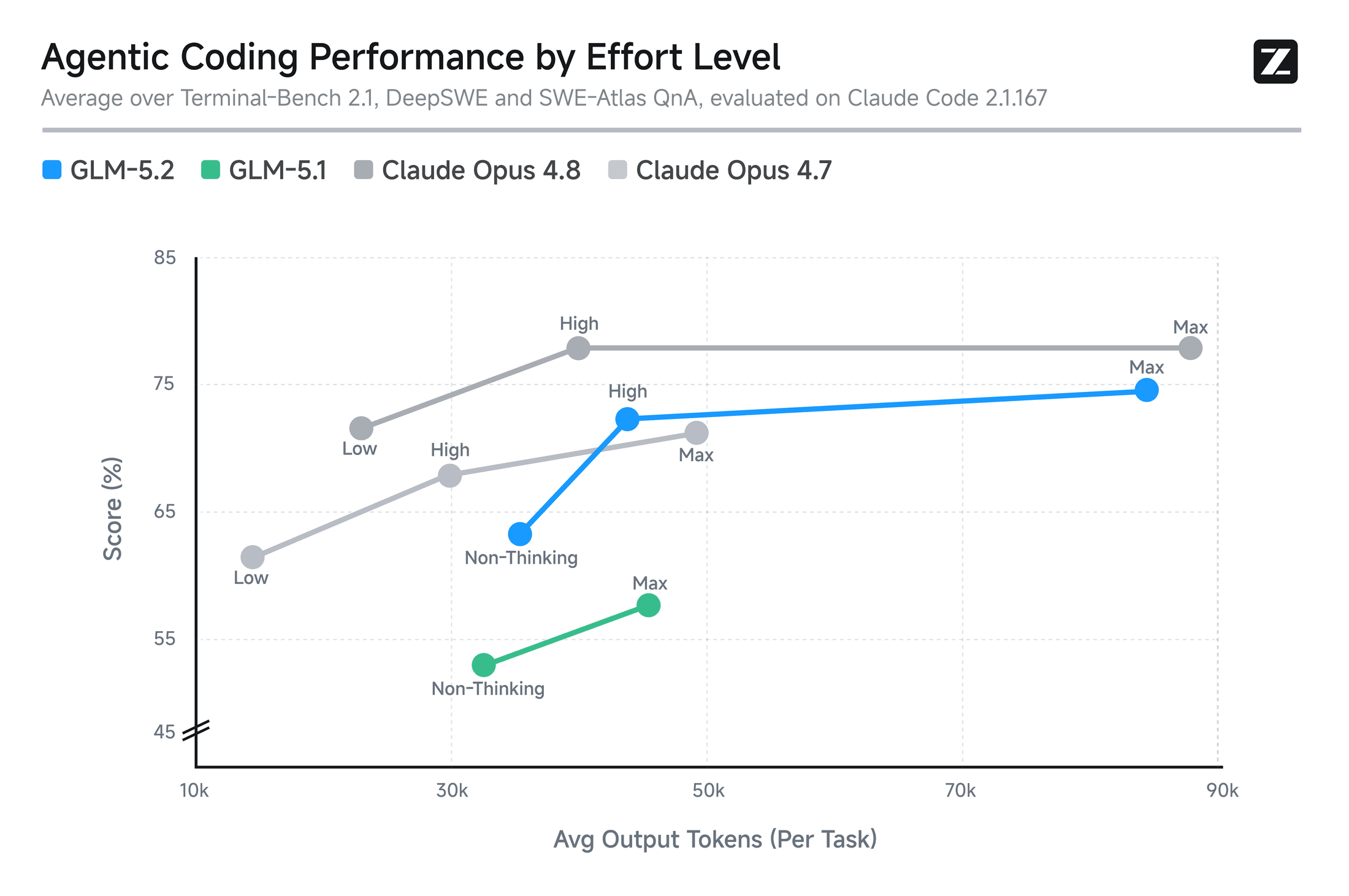
For Phala, this matters because stronger long-context and agentic coding capability increases the amount of sensitive context that developers want to route through inference. GLM-5.2 on Phala is therefore more than another model listing: it is a launch-partner path for today’s open-source SOTA confidential AI model, connecting model capability to TEE-backed privacy guarantees.
Benchmark in TEE: GLM-5.2-FP8 on 8×H200 with SGLang
We tested GLM-5.2-FP8 on an 8×H200 environment with SGLang 0.5.13.post1. The benchmark matrix used fixed input/output shapes across concurrency caps, and the main serving metric is completion throughput per requested concurrent user.
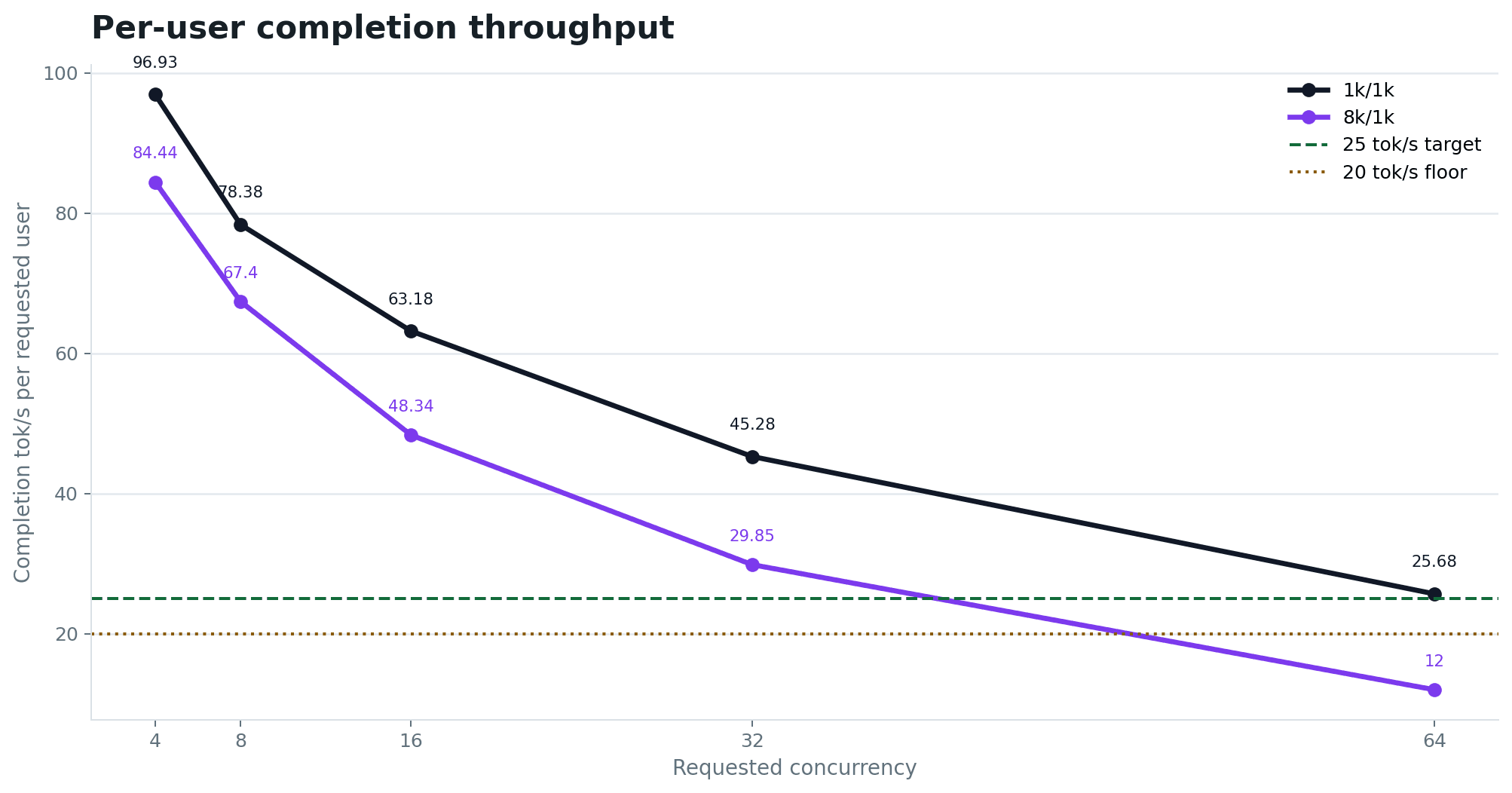
At 1k input / 1k output, GLM-5.2-FP8 stays above the 25 tok/s/user target through c64, reaching 25.68 tok/s/user at 1,643.57 aggregate completion tok/s. At 8k input / 1k output, the run stays above the same target through c32, reaching 29.85 tok/s/user before falling to 12 tok/s/user at c64.
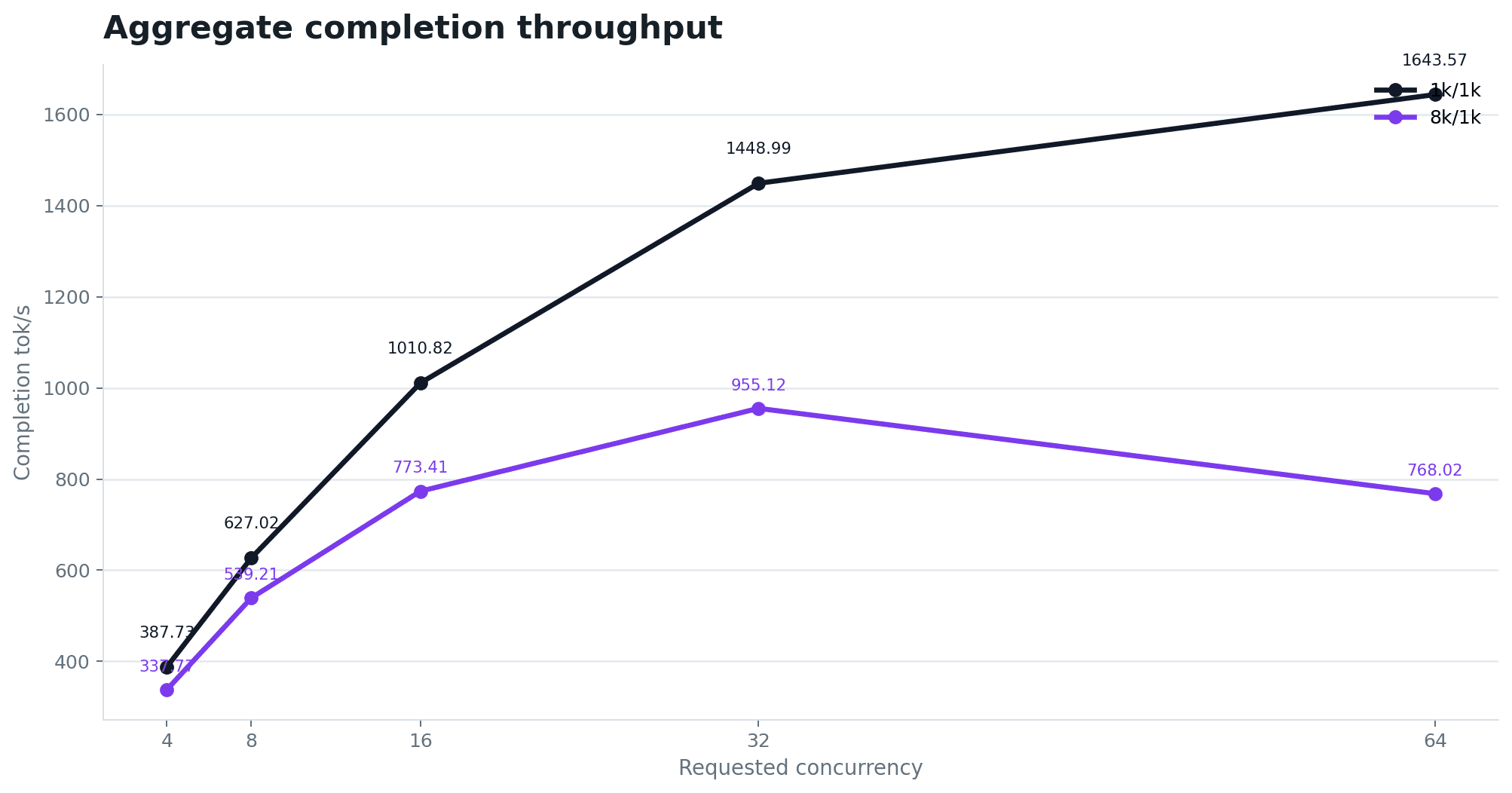
Aggregate throughput continues scaling for the 1k/1k shape through c64. The 8k/1k shape peaks around c32, then drops at c64 as latency pressure dominates.
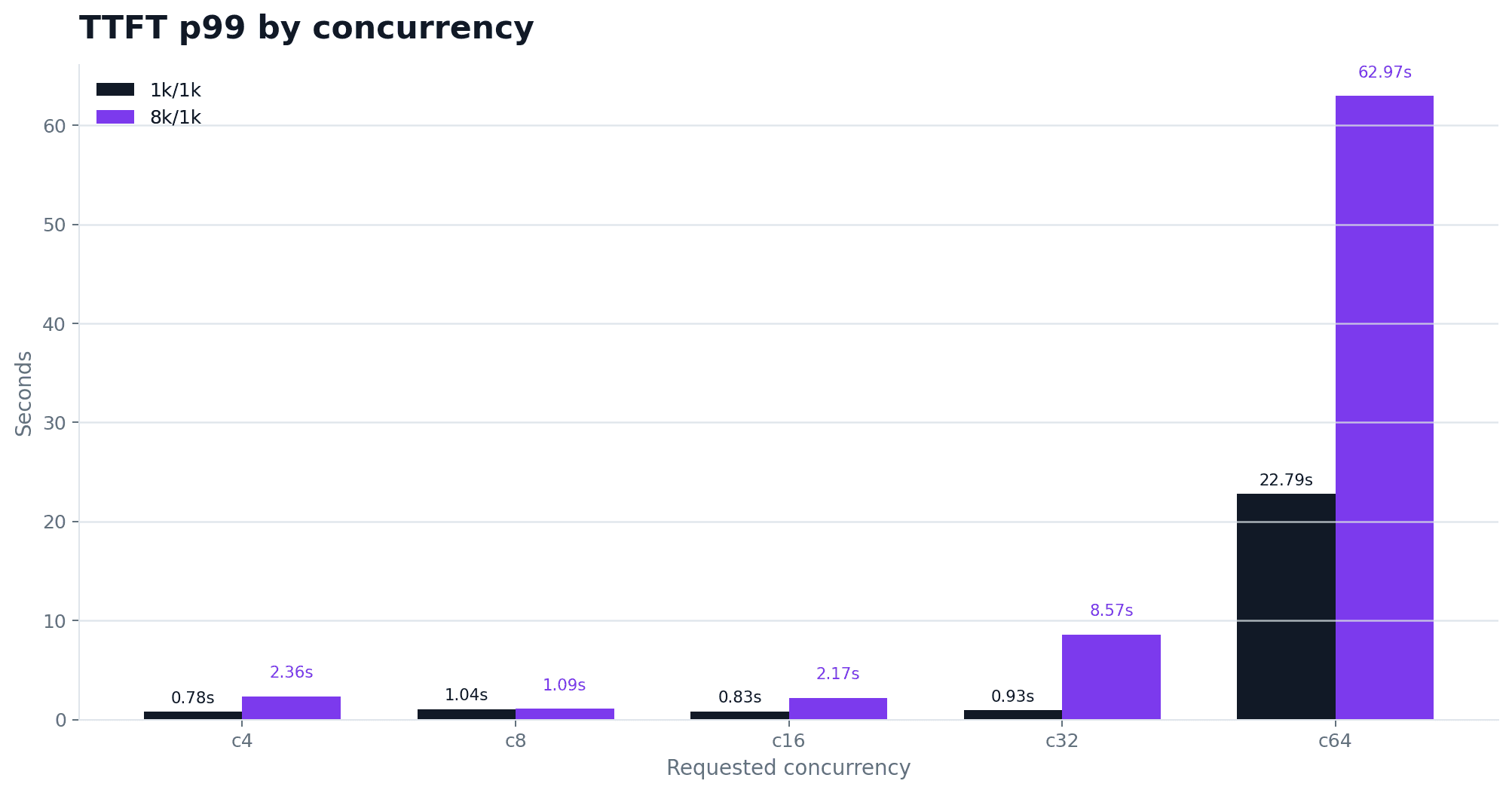
TTFT p99 is the practical warning signal for production serving. The 8k/1k shape rises to 8.57s at c32 and 62.97s at c64, while 1k/1k reaches 22.79s at c64 even though per-user throughput still clears the 25 tok/s/user target.
Why confidential inference matters
The value of GLM-5.2 grows with context length and task complexity. That also raises the privacy burden: agents may carry repository context, customer records, legal documents, operational credentials, or proprietary business logic in their prompts and tool traces.
Confidential inference gives teams a deployment path where sensitive AI workloads can run inside hardware-isolated environments with verifiable runtime properties. For builders, that means model capability, throughput, and data protection can move together instead of being handled as separate adoption blockers.
What builders can run
- Private agent workflows over source code, documents, tools, and long-running project context.
- Enterprise assistants that reason over customer data, internal knowledge bases, and compliance-sensitive records.
- Developer migrations that need OpenAI-compatible routing with a privacy AI deployment path.
Model access and pricing
GLM-5.2 is live on both Phala and Redpill. Both pages use the same listed input/output pricing.
- Phala model page: https://phala.com/models/z-ai/glm-5%2E2
- Phala pricing: $1.40/M input tokens, $4.60/M output tokens.
- Redpill model page: https://redpill.ai/models/z-ai/glm-5.2
- Redpill pricing: $1.40/M input tokens, $4.60/M output tokens.
Benchmark setup
The run used SGLang bench_serving with a random dataset, fixed ISL/OSL, request-rate inf, max-concurrency caps, apply-chat-template, random-range-ratio 1.0, and num_prompts equal to 2×concurrency. The backend used zai-org/GLM-5.2-FP8, TP=8, BF16 KV cache, and EAGLE speculative decoding.
SGLang reported an effective max_running_requests=48 for speculative decoding. The run follows the current fixed-sequence harness and includes cache activity during warmup and run phases, so a strict no-cache prefill target should be validated with a separate flush/no-cache run.